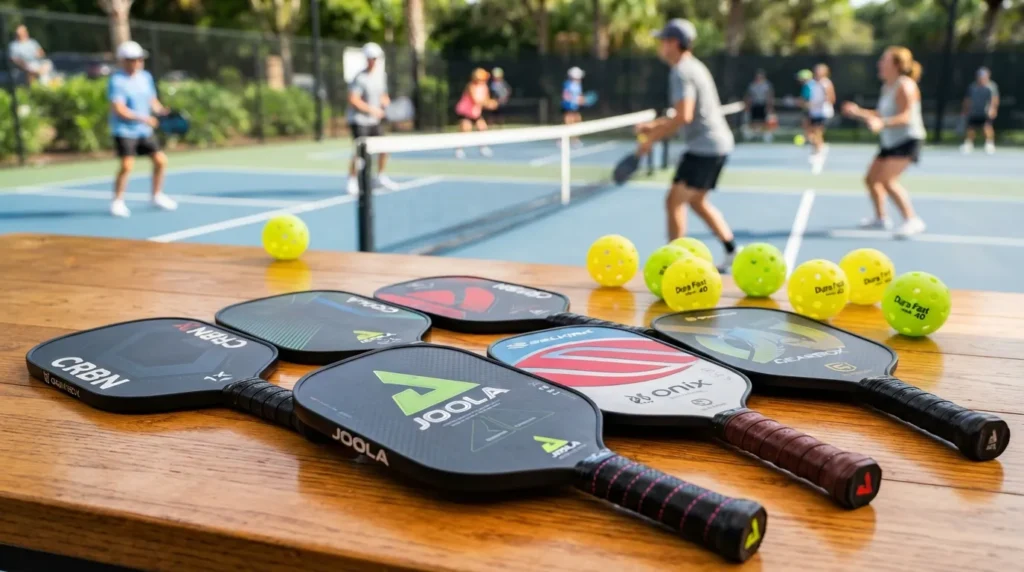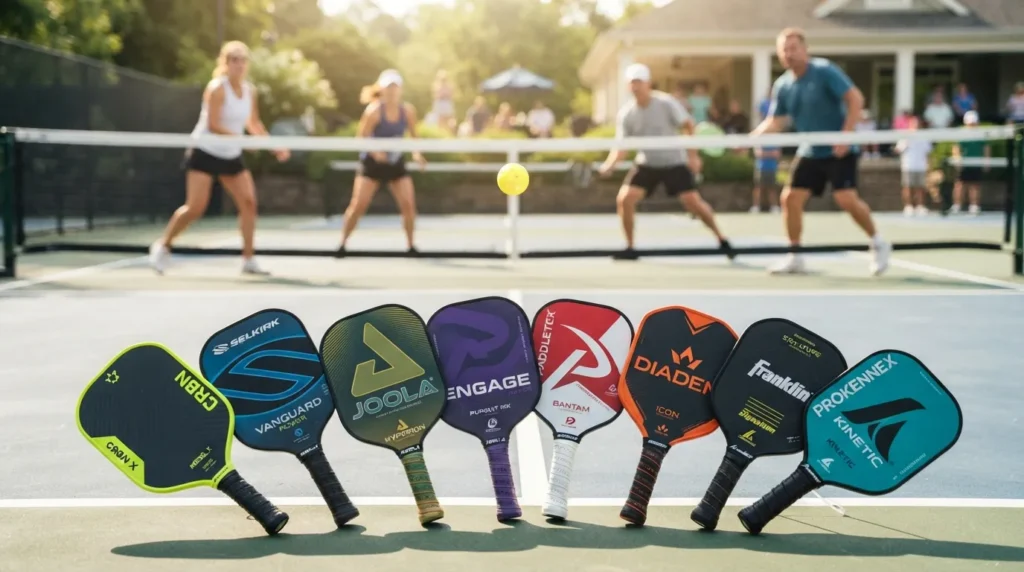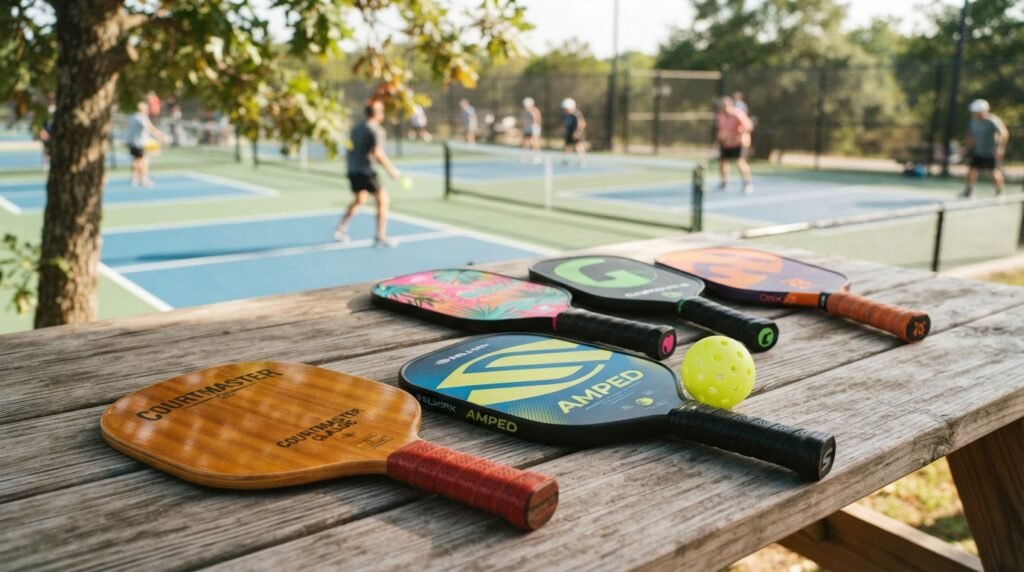
Your first step onto the court can bring a powerful rush of excitement. The game’s energy soon shows why your equipment matters. The right pickleball gear can make play feel smooth instead of frustrating.
This guide helps you choose quality pickleball gear, including the best pickleball paddles, for your technique and budget. Performance depends on connected features such as face material, core density, and handle grip. Whether you play for fun or compete at a high level, these parts help you master court strategies.
We help you compare options that match your current development stage. Explore how the right equipment can elevate your game.
Key Takeaways
- Learn how core materials and face textures influence your shot accuracy.
- Understand the importance of weight distribution for your specific playing style.
- Discover how to match your equipment to your current skill level and goals.
- Identify the essential handle features that prevent fatigue during long matches.
- Use this guide to make informed decisions that fit your personal budget.
Choose the Best Pickleball Paddles by Skill Level and Playing Style
Finding the best pickleball paddles starts with knowing your playing style. The right paddle feels like an extension of your arm, helping you hit with control and confidence. Matching your gear to your skill level can speed your progress on the court.
Step 1: Match Paddle Characteristics to Your Experience
If you are starting, focus on forgiveness and consistency. A larger sweet spot helps limit errors on off-center hits. These paddles are easier to move, so you can learn proper technique instead of fighting your gear.
Experienced players often seek features that improve performance. You may want more touch for resets or extra stiffness for aggressive drives. Choosing top pickleball paddles for your skill level helps your gear support growth instead of holding you back.
Step 2: Identify Your Preferred Court Strategy
Your court strategy should guide the paddle you carry. For patient play with dinking and placement, choose control-oriented models. Their softer feel gives feedback that helps keep the ball low and deep.
For an aggressive style, choose a paddle built for power. These top pickleball paddles help create pace during fast exchanges and finish overheads with ease. Knowing whether you prefer finesse or force helps you choose the best pickleball paddles for your matches.
| Skill Level | Primary Focus | Paddle Attribute |
|---|---|---|
| Beginner | Consistency | Large Sweet Spot |
| Intermediate | Versatility | Balanced Weight |
| Advanced | Specialization | High-Performance Core |
Compare Paddle Weight, Shape, and Balance Before You Buy
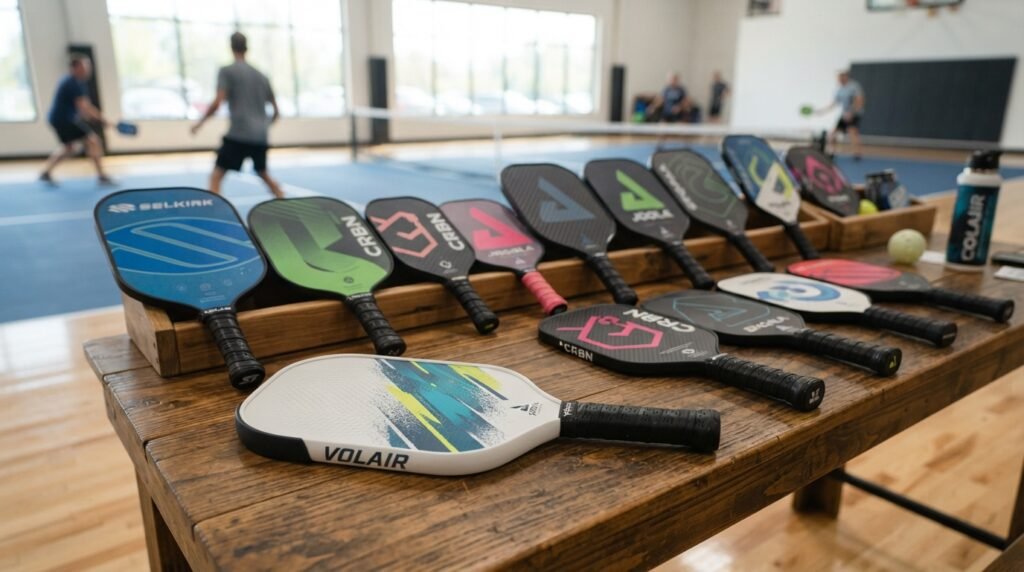
A paddle’s physical traits shape its feel and performance during intense rallies. These details help you find a paddle that fits your playing style.
Step 3: Select the Right Paddle Weight
Weight strongly affects how a paddle handles. Lightweight pickleball paddles typically weigh under 7.5 ounces and move quickly during fast net exchanges. They also help you reset your paddle fast, which suits defensive play.
Heavier paddles put more mass behind the ball, adding power and stability. They may reduce vibration but can cause arm fatigue during long matches. Balance speed with your need for raw power.
Step 4: Choose a Shape That Fits Your Reach and Technique
Paddle shape affects sweet-spot size and reach. Standard wide-body shapes offer a larger, forgiving sweet spot, so they suit beginners. They also provide a stable platform for consistent contact.
Elongated paddles add reach and whip, making them ideal for advanced players seeking extra spin. Hybrid shapes bridge the gap with balanced reach and surface area. Choose based on defensive coverage or aggressive offensive shots.
Step 5: Check Handle Length, Grip Size, and Balance
Handle and grip dimensions affect how securely you hold the paddle. A longer handle helps with a two-handed backhand by giving both hands enough space. Match the grip circumference to your hand size to prevent slipping.
Balance also affects your swing in important ways. A head-heavy paddle adds power, while a handle-heavy design feels lighter in your hand. When searching for the best pickleball paddles, consider how these dimensions affect comfort and control.
| Feature | Lightweight | Mid-Weight | Heavyweight |
|---|---|---|---|
| Maneuverability | Excellent | Moderate | Low |
| Power Output | Low | Moderate | High |
| Stability | Low | Moderate | High |
Evaluate Paddle Materials and Performance Technology
Your equipment’s performance depends on its construction materials. Learning about these parts helps you find quality pickleball paddles for your athletic needs. Focus on the face and core to choose equipment that improves your court experience.
Step 6: Examine the Face Material for Spin and Touch
The paddle surface controls how the ball reacts after contact. Fiberglass faces add pop and power, making them popular with many players. Raw carbon fiber is often considered the best paddle for spin because its texture grips the ball well.
Step 7: Compare the Core for Control, Power, and Sound
The core acts as the paddle’s engine. Polypropylene cores are the industry standard because they provide a soft feel and reduce vibration. They help lower noise and maintain control during dink rallies.
| Core Material | Primary Benefit | Sound Level |
|---|---|---|
| Polypropylene | Control & Touch | Quiet |
| Nomex | Power & Speed | Loud |
| Aluminum | Lightweight Feel | Moderate |
Step 8: Inspect Durability and USAPA Approval
Investing in durable pickleball paddles helps your gear withstand frequent play. Check for a strong edge guard that protects the paddle from ground strikes. Quality construction prevents delamination and protects the face’s structure over time.
Finally, confirm that your model has the official USA Pickleball approval stamp. This certification shows that the paddle meets strict tournament rules. An approved model prepares your equipment for any competitive setting.
Use Pickleball Paddle Reviews to Compare Top Models
Many pickleball paddle reviews can feel overwhelming without a plan. Rather than seeking one “best” option, compare features with your needs. Your experience can help you find gear that improves your game.
Step 9: Compare Beginner-Friendly Models
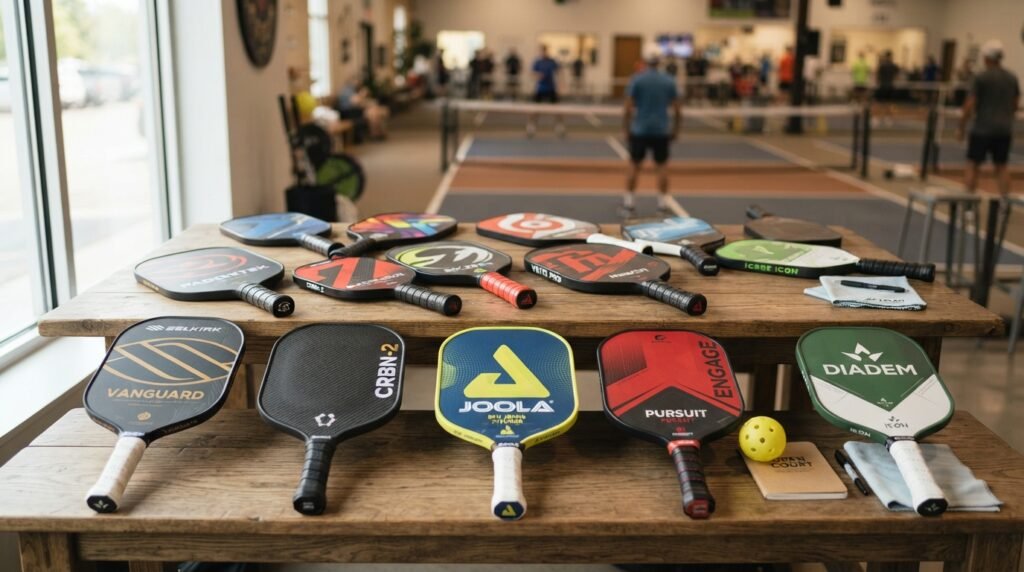
When you start, choose gear with forgiveness and a large sweet spot. Many affordable pickleball paddles offer strong value without reducing quality needed for proper technique. For example, the $89.99 Hype X is a popular choice that balances cost and reliable performance for new players.
Step 10: Compare Intermediate All-Court Paddles
As you improve, seek a balance of control and power. Intermediate models often have a versatile design for play at the kitchen line and baseline. Reviews should note consistent touch and maneuverability, which support defensive resets and offensive drives.
Step 11: Compare Advanced and Competitive Paddles
Advanced players often value technical specs that provide a competitive edge. Raw carbon surfaces offer the best paddle for spin and support aggressive shot placement. These top pickleball paddles often use 16mm cores for better vibration reduction and a stable feel during intense rallies.
| Category | Primary Focus | Key Feature |
|---|---|---|
| Beginner | Forgiveness | Large Sweet Spot |
| Intermediate | Versatility | Balanced Weight |
| Advanced | Performance | Raw Carbon Surface |
Balance Performance, Price, and Comfort for Your Budget
Finding the ideal paddle starts with balancing price, quality, and comfort. Many players seek affordable pickleball paddles, but your equipment affects your growth on the court. The right balance helps you enjoy the game without paying for features you do not need yet.
Step 12: Set a Realistic Paddle Budget
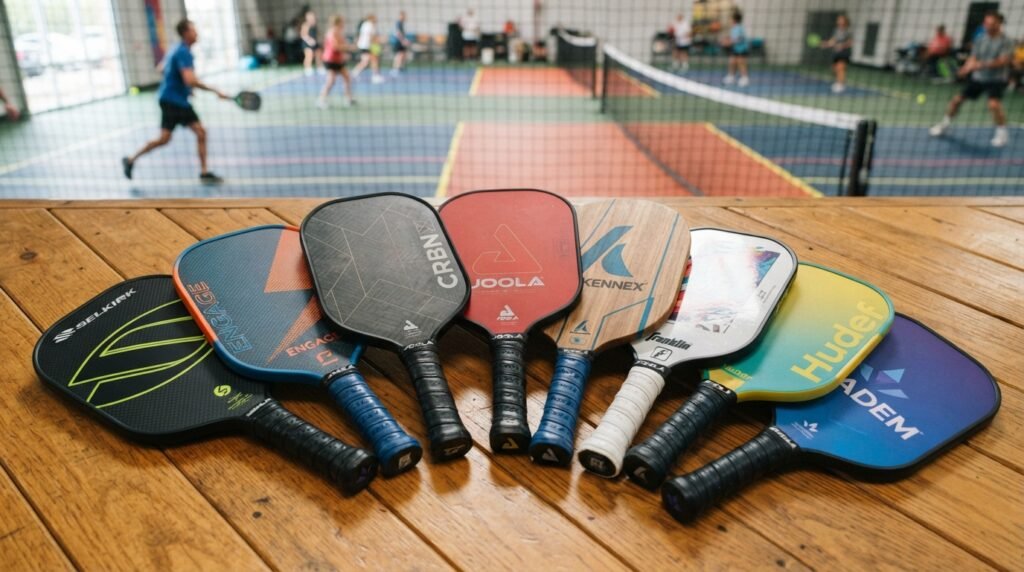
Wood paddles offer a low-cost start for casual players, but modern materials respond better. As you improve, performance composite models offer a stronger mix of power and touch. Competitive players may make a major investment in premium carbon fiber options, which offer superior consistency and advanced surface textures.
When shopping, look for durable pickleball paddles that withstand frequent play without losing structural strength. Paying slightly more at first can reduce replacements and lower long-term costs. It also keeps your gear reliable during intense matches.
Step 13: Calculate Value Beyond the Purchase Price
The lowest price does not always provide the best value for your needs. Consider warranty coverage, which protects your investment against manufacturing defects. A paddle lasting two seasons can offer better value than one wearing out after only a few months.
High-quality pickleball paddles can also improve your game by giving consistent feedback on every shot. Predictable gear lets you refine technique instead of compensating for equipment limits. Always weigh ownership costs, replacement frequency, and effects on skill growth.
| Paddle Type | Best For | Durability | Price Range |
|---|---|---|---|
| Wood | Beginners | Low | $ |
| Composite | Intermediate | Medium | $$ |
| Carbon Fiber | Advanced | High | $$$ |
Step 14: Test Fit and Comfort Before Committing
Before buying, evaluate how the paddle feels in your hand. Many players find that lightweight pickleball paddles reduce arm fatigue and support faster swings during long rallies. Check the grip size, because an improper fit can cause discomfort and poor control.
Test the paddle’s balance to see whether it feels head-heavy or handle-heavy. This balance affects your maneuverability at the net. Also check vibration dampening, which helps prevent elbow strain. Testing these features helps your paddle support long-term health and enjoyment.
Make Your Final Paddle Choice with Confidence
Selecting the right equipment can transform your time on the court. You now know how to assess weight, grip, and core technology. Use these details to find the best pickleball paddles for your style.
Focus on how a paddle feels in your hand during practice swings. Quality pickleball paddles should balance power and control while fitting your physical needs. Choose a paddle that builds your confidence during every rally.
Check for USAPA approval before finalizing your purchase. This approval shows your gear meets professional standards for competitive play. Investing in top pickleball paddles provides long-term value as you grow.
Test different models at local clubs or shops whenever possible. Hands-on experience remains the most reliable way to improve your pickleball gear collection. Trust your instincts when choosing equipment that helps you reach your next performance milestone.