When you step onto the court, excitement often follows. Whether you are starting or sharpening your competitive edge, success rarely depends on raw power. Instead, true mastery comes from smart positioning, patience, and precise shot selection.
This guide offers practical pickleball tips for better decisions during every rally. We will cover essential equipment, serving mechanics, kitchen strategies, and advanced movement patterns. Focus on one or two changes at a time to make these new skills dependable parts of your game.
Improvement is a journey built on repeatable practice, not overnight success. Use these pickleball tips to refine your approach and dominate your next match with confidence and clarity.
Key Takeaways
- Focus on consistent positioning rather than relying solely on power.
- Master the kitchen area to control the pace of your rallies.
- Implement one new technique at a time to ensure long-term skill retention.
- Prioritize smart shot selection to force errors from your opponents.
- Develop a routine for match-day habits to maintain your mental focus.
Build Your Starting Plan Around Your Skill Level
Becoming a better player starts when you match your practice habits to your current skill level. Effective pickleball strategies require an honest look at your strengths and weaknesses. Whether you are learning basic rules or preparing for tournaments, a clear plan can speed your progress.
Assess Your Current Skills and Playing Goals
First, decide whether you are a beginner seeking consistency or an advanced player sharpening tactics. Beginners should learn kitchen rules and basic serve mechanics first. The official USA Pickleball rules are the best place to start. For competitive play, focus on advanced pickleball strategies such as third-shot drops and defensive resets.
Clear goals help you choose suitable lessons and practice intensity. You may want to join a local league or enjoy social matches with friends. Knowing your goal helps each hour on court support your long-term growth, and it tells you which pickleball tips to focus on first.
Choose the Right Paddle, Balls, and Court Shoes
Proper gear supports strong performance and helps prevent injuries. A quality paddle provides the control needed for precise shots. Senior players can use our guide to choosing a pickleball paddle for seniors to compare weight, grip size, and core thickness. If you plan to play in sanctioned events, check that your paddle appears in the USA Pickleball equipment database. Also, use standard pickleball balls that match your local court surface.
Never overlook supportive court shoes made for lateral movement. Running shoes often lack stability for this sport’s quick side-to-side steps. The right footwear protects your ankles and improves court coverage.
Set Practice Targets You Can Measure
Specific, measurable targets make training progress easier to track. Instead of only hitting balls, complete a set number of deep returns in a row. This approach sharpens your consistency and builds muscle memory.
Use the following table to track your progress during weekly practice sessions:
| Practice Drill | Goal | Success Metric |
|---|---|---|
| Deep Serves | Consistency | 8 out of 10 in bounds |
| Dinking | Control | 20 consecutive shots |
| Third-Shot Drops | Accuracy | 5 landing in the kitchen |
Practice one technical pattern at a time to avoid feeling overwhelmed. Record your results to find which game skills need more attention. Consistent, goal-focused practice is the fastest way to improve your performance.
Use These Essential Pickleball Tips to Control Every Rally
Control in pickleball starts with your paddle grip and footwork. Solid fundamentals help you set the pace and make opponents miss. These basic pickleball tips help you handle fast exchanges at the kitchen line.
Keep Your Paddle in the Ready Position
Keep your paddle in front of your body at chest height. This ready position helps you answer fast volleys and speedups. Centering your paddle also cuts the time needed to cover both sides.
Many experts recommend a slight backhand bias in your grip. This change helps defend your weaker side, which advanced players often attack.
Move With Short, Balanced Steps
Avoid long, lunging strides because they can hurt your balance. Instead, use short, choppy steps and stay low during each rally. This controlled movement keeps you ready to change direction quickly.
Watch Your Opponent’s Paddle Instead of the Ball Alone
Do not track only the ball; watch your opponent’s paddle angle. That angle can show a shot’s direction and pace before contact. Reading these clues gives you a split-second advantage.
Recover to a Strong Court Position After Every Shot
Never stand still after hitting the ball. Return at once to a balanced, neutral position for the next shot. This habit closes open lanes and keeps you near the center of play.
| Habit | Benefit | Impact on Rally |
|---|---|---|
| Ready Position | Faster reaction time | Defends against speedups |
| Short Steps | Better balance | Increases court coverage |
| Paddle Reading | Anticipation | Neutralizes opponent’s power |
| Quick Recovery | Court control | Prevents unforced errors |
Apply these habits often, and you will have more time to make smart choices. Practice these small changes during your next session to improve rally control right away.
Develop Reliable Serves and Returns
A steady serve and return plan can quickly improve your performance. These opening shots shape the rally and help you control its pace. Follow these pickleball tips to make both shots a strong tactical advantage.
Serve Deep With Height, Direction, and Consistency
A strong serve does not need great power. Use a repeatable motion to send the ball deep into your opponent’s court. Consistency is your primary goal, because a missed serve gives away a free point.
Give the serve enough height to clear the net safely and land near the baseline. Aim toward an opponent’s weaker side to force a hard return. This small change makes it harder for rivals to start their attack.
Return Deep to Push Opponents Behind the Baseline
The return of serve is arguably the game’s most important shot. Hit the ball deep to keep opponents behind the baseline. This stops them from rushing to the kitchen line and gives you time to prepare.
Keeping opponents back limits their ability to hit aggressive volleys. Deep returns create space and help you move forward with confidence. Always choose depth instead of trying to hit a winner on the return.
Follow the Return With an Efficient Transition
After a deep return, move toward the non-volley zone at once. Stay balanced as you move, and watch your opponent’s paddle. This focus helps you predict the next shot and adjust your position.
Good movement during this phase prepares you for the third shot. Staying balanced and alert helps you handle any shot your opponent sends back. Use these pickleball tips to build a strong foundation for every point.
| Shot Type | Primary Goal | Key Focus Area |
|---|---|---|
| Deep Serve | Force weak return | Depth and placement |
| Deep Return | Gain court position | Baseline clearance |
| Transition | Reach the kitchen | Balance and awareness |
Master the Non-Volley Zone and Dinking Game
Mastering the non-volley zone is one of the best ways to improve pickleball skills. This area, often called the kitchen, controls game pace and rewards finesse over raw power. Control this space to limit attacks and create more chances. The pickleball tips in this section apply to beginners and advanced players alike.
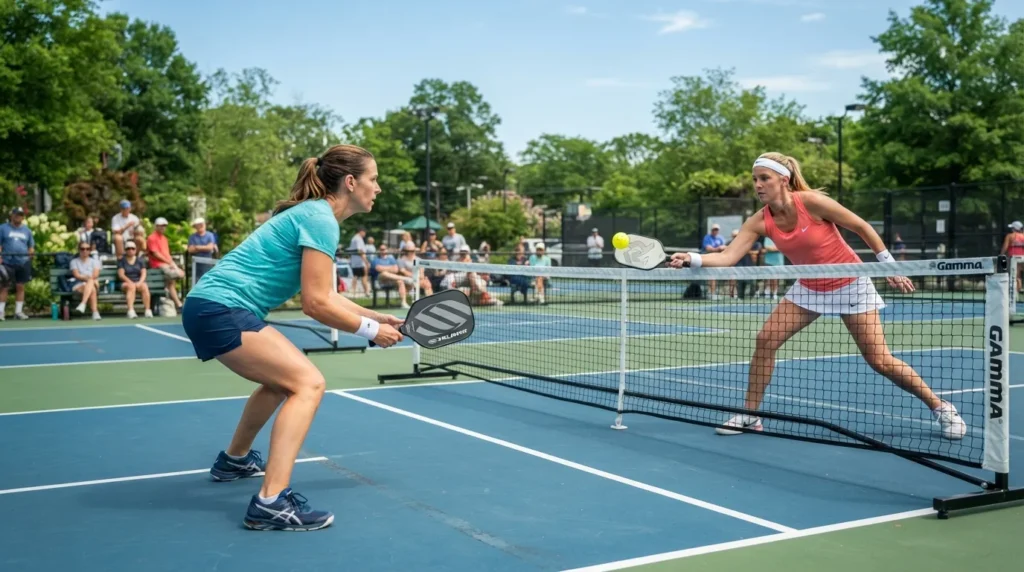
Reach the Kitchen Line Without Entering Too Early
Many players rush to the net before earning their position. Move forward only after hitting a deep shot that keeps opponents back. Moving in too soon leaves you open to shots at your feet.
Patience is your greatest asset during this transition. Wait for the ball to bounce, and make sure your momentum moves toward the net. This controlled approach helps you reach the line balanced and ready.
Hit Soft Dinks That Stay Low Over the Net
A successful dink needs a relaxed grip and steady knees. Keep your paddle face open, then use your legs to lift the ball gently over the net. Keep the ball low so your opponent must hit upward.
A soft touch reduces unforced errors. Use consistent motions that land the ball deep in the kitchen. This builds muscle memory for delicate shots.
Recognize When a Dink Is Ready to Accelerate
Not every dink should stay soft. Learn to spot a ball floating high above the net. When a ball reaches net height, you have a clear chance to attack.
Accelerate through these balls with a compact motion. Do not swing too hard, or the ball may hit the net or go out of bounds. Precision matters more than pure speed.
Reset Hard Shots Instead of Trying to Counter Every Ball
Facing a powerful drive may make you swing back with equal force. Yet countering every hard shot often causes errors. Instead, use a reset shot to remove the ball’s pace.
Soften your hands at impact to drop the ball back into the kitchen. This defensive move makes your opponent start the rally again. Effective resets help you control intense exchanges.
| Shot Type | Primary Goal | Key Technique |
|---|---|---|
| Soft Dink | Neutralize Opponent | Low arc, relaxed grip |
| Attackable Dink | Win the Point | Compact, downward strike |
| Reset | Defensive Recovery | Absorb pace, soft hands |
Improve Your Third-Shot Strategy
A reliable third shot is one of the best ways to control the pace of a rally. This shot bridges the baseline and kitchen line, where players win most points. Mastering this transition makes opponents defend while you gain a better position. It is also where smart pickleball strategies pay off most.
Choose Between a Third-Shot Drop and Drive
Choose a drop or drive based on ball height and your opponent’s court position. Use a drive when the ball is high, so you can hit downward with pace. Choose a drop when you must hit below net level.
| Shot Type | Best Ball Height | Primary Goal |
|---|---|---|
| Third-Shot Drive | Above net level | Force a weak pop-up |
| Third-Shot Drop | Below net level | Neutralize the point |
| Mixed Strategy | Variable | Create unpredictability |
Build a Consistent Third-Shot Drop Motion
A successful drop needs a smooth, controlled motion, not a wrist flick. Create a high arc that lands softly in the opponent’s kitchen. This keeps the ball from floating and stops opponents from attacking easily.
Combine Drops and Drives to Prevent Predictability
Using one shot type makes your game easy to read. Alternate a heavy drive with a soft drop to keep opponents guessing. This variety breaks their rhythm and helps you reach the net safely.
Move Forward Only After Creating a Defensible Ball
Many players rush to the kitchen before their shot lands. Watch your shot’s quality before moving forward. If the ball remains attackable, pause and prepare for a defensive return instead of sprinting into a vulnerable position.
Apply Smart Doubles Positioning and Communication
Doubles success in pickleball depends on how well you and your partner move together. Treating the court as shared space reduces unforced errors and helps you keep a strong formation.
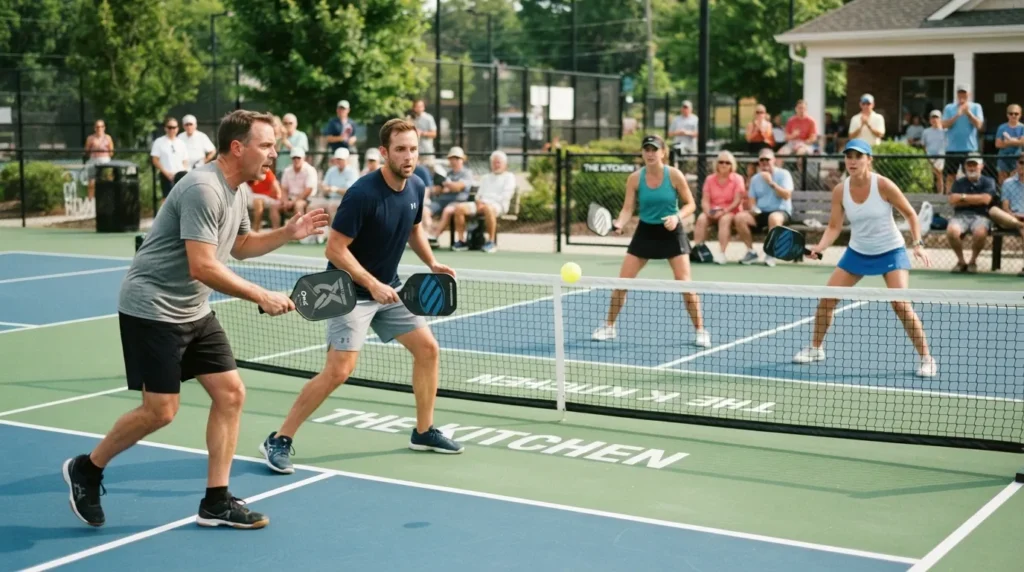
Move as a Connected Two-Player Unit
Picture an invisible rubber band connecting you and your partner at the waist. As the ball moves, both players should shift sideways and keep the same distance. This synchronized movement keeps you ready to defend incoming shots.
Cover the Middle Without Creating Open Lanes
The middle is often the most vulnerable part of the court during a rally. Before each point, decide who will take middle balls. Usually, the player with their forehand in the middle should take the shot for more power and control.
Call “Mine,” “Yours,” and “Switch” Before Contact
Strong communication helps a team play at a high level. Call your plan early, while the ball is still in the air. Short commands such as “Mine” or “Switch” prevent confusion during fast exchanges.
Switch Sides Responsibly After Lobs and Crosscourt Balls
When a lob pulls one player away, the other must cover the open space at once. If you move wide, your partner should slide toward center and protect the court. Always focus on recovering to a balanced stance before your next aggressive shot.
| Scenario | Primary Action | Communication |
|---|---|---|
| Middle Ball | Forehand takes it | “Mine” |
| Deep Lob | Switch positions | “Switch” |
| Wide Dink | Slide together | “Yours” |
These doubles pickleball tips can make your game more fluid. Steady communication and disciplined movement help you win more points against tough competition.
Choose Better Shots With Advanced Court Strategy
Advanced players win by outthinking opponents instead of hitting harder, using smart pickleball strategies. Beyond the basics, you see the court as a puzzle to solve. Success depends on finding and using small gaps in your opponent’s game.
Attack Your Opponent’s Backhand and Movement Limits
Most players have a weaker backhand that fails under steady pressure. Aim shots at this side to force an uncomfortable position. Watch their movement to see whether wide balls or deep shots cause trouble.
Targeting these weaknesses lets you control the rally without using maximum power. If an opponent recovers slowly, keep moving them until they give you an easy shot.
Target the Player Who Has Less Time to React
In doubles, spotting the player under pressure is central to good doubles strategy. If one player is out of position or moving toward the net, hit toward them to reduce reaction time.
This choice forces a quick decision and often causes an unforced error. Keep the ball away from the ready player to control the rally’s flow.
Create Open Space Before Hitting Into It
Many beginners hit toward open space too soon, allowing opponents to reach the ball easily. First, use shots to pull opponents out of position. Then attack the gap you create with confidence.
Strategic patience matters here. Do not rush the winner; wait for your placement to open the court.
Change Pace, Height, and Spin With Purpose
Predictability hurts advanced play. Vary speed, height, and spin to keep opponents guessing. A well-placed middle shot can confuse partners about who should take the ball.
| Shot Type | Strategic Goal | Expected Outcome |
|---|---|---|
| Low Dinks | Force an upward strike | Set up an attack |
| Deep Drives | Push opponents back | Create transition space |
| Middle Shots | Cause communication errors | Win the point outright |
Use these pickleball strategies regularly, and your game will become harder to read. Make choices that keep opponents on defense, and your win rate can climb.
Handle Lobs, Volleys, Speedups, and Defensive Pressure
When opponents raise the pressure, staying calm becomes your greatest asset. A few simple defensive habits can turn pressure into opportunity. Composure can neutralize aggressive play and keep the rally alive, and the pickleball tips below show you how.
Defend High Lobs With Positioning and Patience
Judging a lob’s path takes practice. Communicate clearly with your partner to decide who will take the shot. If the ball clearly sails out, let it go instead of risking a weak return.
When you play the ball, choose an overhead smash or controlled defensive reply. If you are out of position, a soft reset is safer than a risky overhead. Patience is your best tool when the ball is high and deep.
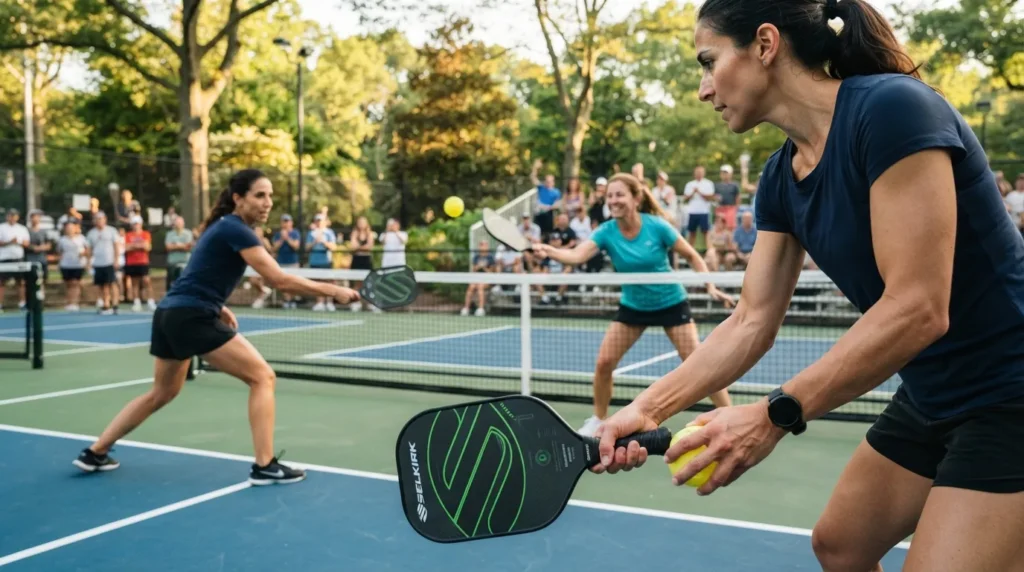
Block Fast Drives With a Stable Paddle Face
Against a powerful drive, resist the urge to swing. Keep your paddle face stable and firm at contact. This simple block absorbs the incoming shot’s pace and redirects it into the court.
Keep your paddle in front of your body. Smaller movements help keep your reaction time sharp. Stability is the key to making a fast drive manageable.
Counter Attacks Without Swinging Too Big
Speedups can surprise players, but compact motions can counter them. Avoid large swings that leave you open to follow-up attacks. A short, punchy stroke usually redirects the ball well.
Use good footwork to stay balanced before contact. A compact swing gives you better control over placement. This approach keeps you ready for the next shot.
Reset From the Transition Zone Under Pressure
The transition zone often creates the most pressure during a match. Use soft, controlled shots that land deep in the opponent’s kitchen. These resets make opponents hit upward, reducing their attacking advantage.
With practice, you can learn to drop the ball gently over the net. This defensive tactic resets the rally and helps you move forward safely. Consistency here supports long-term improvement.
| Defensive Situation | Primary Goal | Key Technique |
|---|---|---|
| High Lob | Neutralize | Communication & Patience |
| Fast Drive | Absorb Pace | Stable Paddle Face |
| Speedup Attack | Redirect | Compact Swing |
| Transition Zone | Reset Rally | Soft Drop Shot |
Train Efficiently to Improve Pickleball Skills
To improve pickleball skills, move beyond casual play and use deliberate practice. A progressive routine turns court time into real results. Apply one of these pickleball tips at a time, and learn each mechanic before adding complexity.
1. Warm Up Your Feet, Shoulders, and Hips
Prepare your body before every game to meet its physical demands. Warm up your feet, shoulders, and hips to prevent injury and improve motion. Dynamic stretching prepares your muscles for quick side moves and powerful shots.
If your elbow or shoulder tends to ache after play, read our tips for protecting your elbow and shoulder.
2. Practice One Technical Pattern at a Time
To improve pickleball skills, practice one motion at a time at first. For dinks, third-shot drops, or drives, keep your focus narrow. Repetition is the key to muscle memory, so do not switch shots too soon.
3. Add Movement and Decision-Making to Drills
After mastering a still motion, add movement to match real game conditions. Use footwork that brings you back to court center after each shot. This helps you make split-second choices while your heart rate rises.
4. Record Your Practice and Identify One Corrective Priority
Record practice sessions with your smartphone, then review your form objectively. Your footage can reveal one corrective priority for your next session. Consistent self-analysis helps refine technique and prevent habits that slow progress.
| Training Tool | Primary Benefit | Skill Focus |
|---|---|---|
| Practice Wall | High-volume repetition | Hand speed and reflexes |
| Ball Machine | Consistent placement | Third-shot drops and drives |
| Rebound Net | Controlled feedback | Soft touch and dinking |
Build Match-Day Habits That Prevent Unforced Errors
Consistent habits help reduce mistakes and find success on the pickleball court. Refining your decisions helps you avoid common mistakes that give opponents easy points. These pickleball tips help you stay calm and consistent during matches.
Control the First Three Shots of Each Rally
Most rallies are decided before players reach the kitchen line. Hit a deep, consistent serve and a deep return to keep opponents pinned back. This early control stops rivals from attacking with speed and power.
Play High-Percentage Targets Instead of Chasing Winners
Many players lose points by attempting spectacular winners from difficult positions. Instead, aim for the middle to reduce errors and confuse your opponents. Prioritizing high-percentage shots keeps rallies longer and forces opponents to make the first mistake.
Use the Score to Guide Risk and Shot Selection
Change your tactics based on whether you lead or trail in a game. With a comfortable lead, play safely to protect your advantage and avoid needless risks. If you trail, apply more pressure while keeping your choices grounded in sound strategy.
Reset Emotionally After Missed Shots and Bad Calls
Even the best players feel frustrated after a missed shot or disputed line call. Create a quick reset routine with deep breathing and a brief, positive word to your partner. This routine keeps you focused on the next point instead of past errors.
Turn These Tips Into Your Personal Game Plan
Your path to becoming a dominant player starts by turning abstract concepts into a clear routine. Choose one or two specific areas to improve each week. This focused plan turns pickleball tips into real results on the court.
Reliable progress depends on executing fundamentals under pressure. Train with deep serves, controlled drops, and disciplined dinking. Stay in a ready position during every rally, because smart positioning builds sharp defense against any opponent.
Strong practice sessions require proper preparation. Wear supportive court shoes from brands like ASICS or K-Swiss to protect your joints during long matches. Keep a written performance log to track growth over time, and review match notes for patterns needing adjustment.
Commit to a weekly schedule with measurable targets. Consistent effort turns new skills into repeatable habits. Share progress with your doubles partner to keep your team strategy aligned.
Your dedication to these habits will elevate your game to the next level.