Do you ever feel that your opening shot puts you at an immediate disadvantage? At the baseline, you may feel pressure just to get the ball over the net. Yet treating this moment as a formality wastes a chance to control the rally from the first contact.
By mastering specific pickleball serving tips, you can turn a routine motion into a tactical weapon. You do not need raw power to dominate; focus on depth, placement, and purposeful variation instead. When you choose consistency over speed, you gain an edge before the point begins.
Learning to ace your pickleball serves takes reliable mechanics and smart decisions. We will guide you step by step to improve your technique and build confidence under pressure. Prepare to raise your game and turn every start into a scoring advantage.
Key Takeaways
- Treat the opening shot as a strategic tool rather than a simple formality.
- Prioritize depth and placement over raw power to force weak returns.
- Use purposeful variation to keep your opponents off balance.
- Build consistent mechanics to ensure reliability during high-pressure matches.
- Develop a smarter decision-making process to exploit opponent weaknesses.
Build a Legal, Consistent Foundation for Your Serve
Every great pickleball player depends on a consistent, legal serve to begin points with confidence. A reliable motion keeps your game steady under pressure. Focus on fundamentals to master how to serve in pickleball and avoid faults that cost points.
Step 1: Learn the Legal Requirements for How to Serve in Pickleball
Before focusing on power or placement, make sure your serve follows the official rules. A legal serve uses specific mechanics that keep play fair. Breaking these rules can end the rally before it starts.
Keep these essential rules in mind during every match:
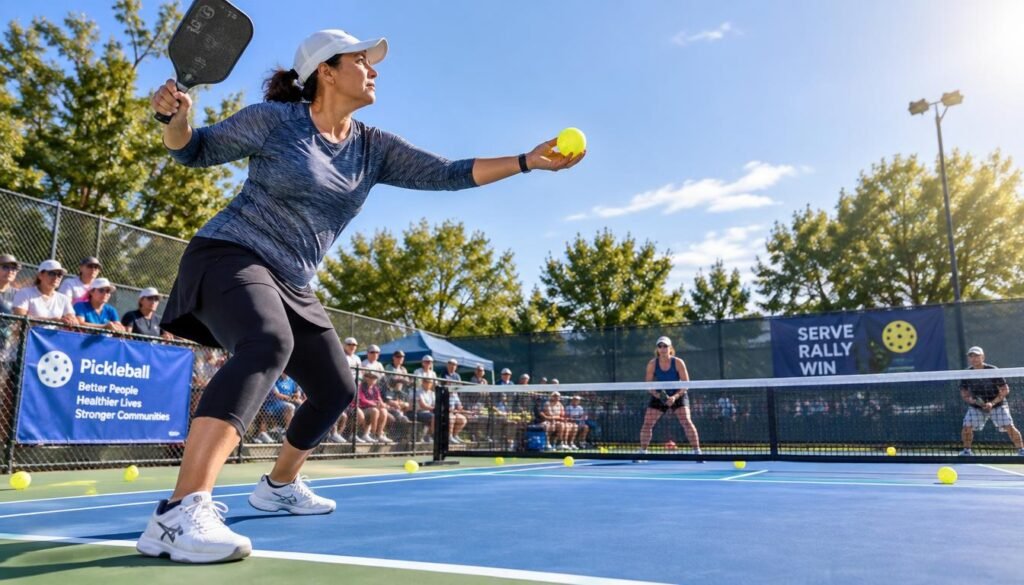
- Contact Point: You must strike the ball below your navel.
- Paddle Position: The highest part of the paddle head must be below the wrist at the moment of contact.
- Swing Direction: Your swing must be an upward arc.
- Foot Placement: Both feet must remain behind the baseline until you make contact with the ball.
- Score Announcement: Always call the score clearly before starting your motion.
Step 2: Choose a Reliable Starting Stance and Grip
Your setup shapes the quality of your swing. Many players find that a semi-closed or closed stance gives them better balance and control. It keeps your chest and paddle aligned, helping you avoid excess body rotation.
Limit extra movement to keep your contact point consistent. These top tips for better serving in pickleball can improve your setup:
- Keep your weight centered to maintain stability.
- Use a relaxed grip to allow for a smooth, fluid swing.
- Align your shoulders toward your target area before you begin your motion.
Step 3: Create a Repeatable Pre-Serve Routine
Consistency is a key trait of a high-level player. A repeatable pre-serve routine helps you stay calm and focused during high-stakes moments. Following the same steps trains your body to perform the motion automatically.
Try adding these elements to your personal routine:
- Score and Breathe: Announce the score clearly and take a deep breath to reset your focus.
- Target Selection: Visualize exactly where you want the ball to land before you move.
- Ball Preparation: Hold the ball in a consistent spot to ensure your toss or drop is identical every time.
- Stance Check: Confirm your feet are properly positioned behind the baseline.
Following these top tips for better serving in pickleball helps build a foundation against any opponent. When your routine becomes automatic, focus less on mechanics and more on strategy.
Improve Your Pickleball Serve Mechanics
You can improve your performance by refining your serving motion. A stiff arm or quick wrist flick often causes inconsistency and limits pace. Use fluid movements from your shoulder for a more reliable, effective delivery.
Step 4: Develop a Smooth Preparation and Swing Path
A consistent swing path shows the best pickleball serving techniques in action. Begin with relaxed shoulder rotation, not a rigid arm movement. This smooth arc helps you control the paddle and place the ball accurately.
Step 5: Add Power Through Your Legs, Hips, and Core
Pickleball power does not come from your arm alone. Use a wide base for balance, then drive upward through your legs. Rotate your hips and engage your core to send energy into a deeper, more penetrating serve.
Step 6: Control Contact Height, Timing, and Spin
Good contact timing helps improve your pickleball serve consistency. Strike the ball at a comfortable height in front of your body for a clean follow-through. Brush the ball’s back or side to add subtle spin, making returns harder.
Step 7: Adjust Your Serve for the Volley-Serve or Drop-Serve Method
Choose between the volley-serve and drop-serve based on your comfort and tactical goals. The volley-serve uses a traditional, rhythmic motion that many players time consistently. The drop-serve lets you control bounce height, which can help if contact timing is difficult.
Both methods are legal, so try each one and find the best fit for your natural swing. Mastering these mechanics will help you improve your pickleball serve and build a strong foundation for your game. Using these best pickleball serving techniques will give you more confidence in every match.
Apply the Best Pickleball Serving Techniques for Placement
Strategic placement turns your serve into an offensive weapon. Build a complete serving strategy for pickleball to guide the rally from its first shot. Targeting the landing spot puts opponents in difficult positions.
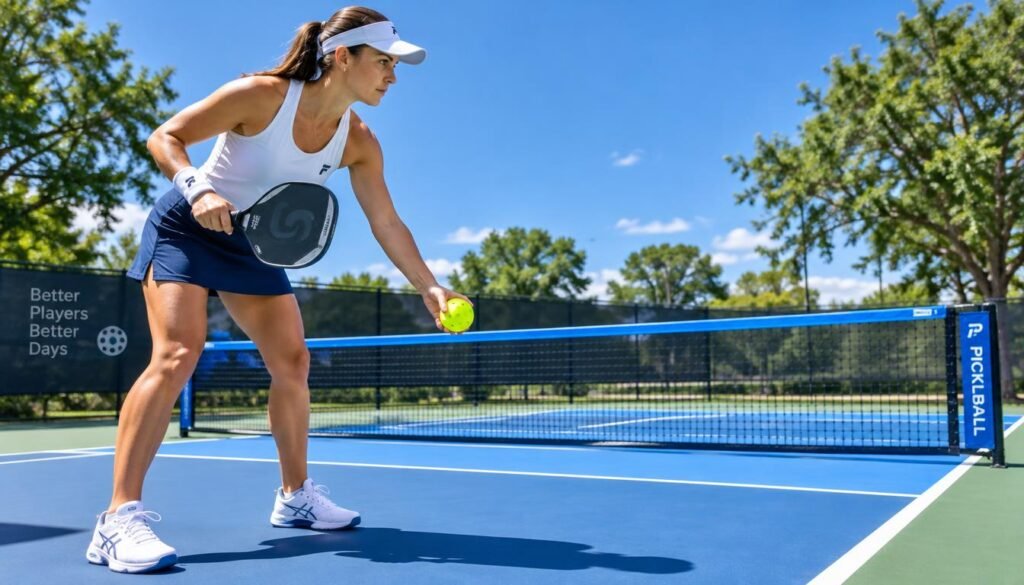
Step 8: Aim Deep to Push Your Opponent Behind the Baseline
Depth is your best tool for stopping an opponent’s attack. A deep serve makes the receiver retreat and reduces their chance to hit an aggressive return.
- Deep serves create more time for you to reach the kitchen line.
- Pushing players back makes it harder for them to execute a clean drop shot.
- A deep ball often results in a weaker, floating return that you can attack.
Step 9: Serve to the Opponent’s Backhand and Movement Patterns
Most players have a weaker backhand that becomes a liability under pressure. Target it often to limit their options and make them hit defensively.
Watch your opponent’s movement early in the match. If lateral movement is difficult, serve toward their feet or wide sidelines to test their mobility.
Step 10: Vary Speed, Spin, Height, and Location Strategically
Predictability hurts a successful serving strategy for pickleball. If every ball has the same spot and pace, your opponent will find their rhythm.
Mix up your delivery to keep them guessing:
- Change the height of your arc to alter the bounce trajectory.
- Apply sidespin to make the ball move unexpectedly off the court surface.
- Alternate between high-pace drives and slower, deep lobs.
- Shift your target between the middle and the sidelines to open up court angles.
Step 11: Use the Serve to Start the Rally You Want
Your serve should set up your preferred style of play. A well-placed ball supports a winning serving strategy for pickleball and helps control the game’s pace.
For a fast-paced game, use a deep, flat serve and invite a return you can drive. For a patient approach, use a high-spin serve to force a short return. This creates the perfect chance to hit a soft third-shot drop.
Build a Serving Strategy and Practice It Under Pressure
Winning serves require sound technique and smart choices during each point. Good mechanics build a base, but clear thinking separates casual players from competitors. Use top tips for better serving in pickleball by treating each serve as a tactical choice, not only a way to start play.
Step 12: Create a Point-by-Point Serving Strategy for Pickleball
Before stepping to the baseline, assess the score and your opponent’s weaknesses. When ahead, choose a safe, deep serve to protect your advantage. When you need more aggression, target corners and force a difficult return.
Choose a primary target before beginning your motion. Consistency is your greatest asset, so avoid changing your plan at the last second. Choosing one location sharpens focus and reduces unforced errors.
Step 13: Adjust Your Serve for Wind, Sun, and Court Conditions
Wind can greatly change the ball’s path through the air. Against the wind, add power so the ball lands deep. With a tailwind, reduce speed so the ball does not sail out of bounds.
The sun can distract you during afternoon matches. If sunlight reaches your eyes, use a lower toss and spend less time looking up. Changing your court position can reduce glare and improve visibility.
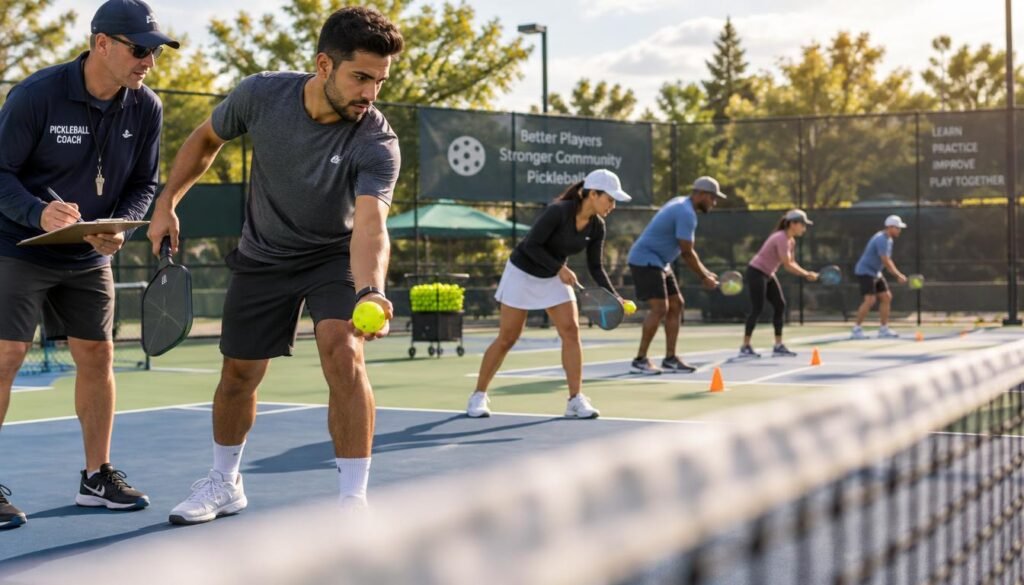
Step 14: Practice Serving Drills for Pickleball
Build confidence by adding structured serving drills for pickleball to your training routine. The two-target exercise builds precision under pressure.
- Set up two targets in the back corners of the service box, roughly one foot from the baseline.
- Hit 10 serves to the first target, then switch to the second target for another 10 serves.
- Record how many balls land within the designated zones to track your progress over time.
- Repeat this cycle until you can hit your target with at least 80% accuracy.
Step 15: Track Results and Fix Your Most Expensive Errors
Track performance to support long-term improvement. Keep a simple serve log to find patterns in your mistakes. If short serves appear often, practice adding more depth.
Identify your most expensive errors, including serves that land in the net or sail long. By isolating these faults, you can adjust your mechanics or target selection. Remember that top tips for better serving in pickleball work only when you actively eliminate your most common weaknesses.
Turn Better Serving Habits Into More Winning Chances
Mastering the pickleball serve requires legal technique and repeatable preparation. Combine controlled power with smart court placement to gain a significant edge.
A deep serve often works better than a high-speed strike. Accuracy can force a weak return, creating immediate tactical value for your team. Focus on consistency to keep rivals guessing about your next move.
Mix a reliable primary serve with carefully chosen variations. Changing pace, spin, and trajectory makes your target harder to predict. This unpredictability makes mastering the pickleball serve vital to your overall game strategy.
Use deliberate practice sessions to refine these skills under pressure. Watch how your serve shapes the rally, then adjust for court conditions. Consistent practice turns into more points during competitive matches.