Do you feel stuck at the same skill level despite playing every week? Many recreational players rely only on athletic ability, but smart pickleball strategy helps you win more points. It lets you outthink opponents instead of simply outrunning them.
Build court awareness and choose precise shots to gain a major advantage. These pickleball tips help you make better decisions during fast rallies. They also help you control the tempo and force errors from your competition.
This guide offers a clear path beyond the 2.5 to 3.5 level. A solid pickleball strategy for beginners can quickly improve your performance. Prepare to raise your game with smarter play and better positioning.
Key Takeaways
- Focus on high-percentage shots to reduce unforced errors during matches.
- Improve your court positioning to cover more ground with less effort.
- Use patience to wait for the right moment to attack the ball.
- Develop better decision-making skills to control the pace of every rally.
- Understand the importance of the non-volley zone in dictating game flow.
Build a Strong Foundation for Pickleball Strategy
Success on the pickleball court begins before your first serve. Focus on physical habits and your mental approach to build a strong base. These essential pickleball tips help prevent common errors and support lasting growth.
Step 1: Identify Your Skill Level, Goals, and Playing Style
Before you can improve pickleball strategy, understand your current skill level. Do not copy professional players whose physical abilities differ from yours. Instead, build your style around your natural strengths.
- Assess your current consistency in rallies.
- Set clear, measurable goals for your next three matches.
- Choose a playing style that fits your movement speed and reach.
Step 2: Establish the Ready Position and Athletic Footwork
Your stance affects how quickly you react to incoming shots. A proper ready position keeps your paddle in front of your chest. This adjustment helps you cover both your forehand and backhand sides.
Footwork powers your movement. Keep your knees bent and stay on the balls of your feet for balance. This pickleball strategy for beginners helps you stay agile during fast exchanges.
Step 3: Learn the Court Zones and Positioning Priorities
Knowing where to stand matters as much as knowing how to hit the ball. The court has specific areas that shape your tactical choices. Use the table below to learn each zone’s priorities.
| Court Zone | Primary Goal | Movement Focus |
|---|---|---|
| Baseline | Deep returns | Stay behind the line |
| Transition Zone | Reset the ball | Move forward carefully |
| Non-Volley Zone | Control the point | Stay balanced and low |
Mastering these zones will help you improve pickleball strategy. Knowing your role in each area helps you make better decisions under pressure. Follow these pickleball tips to keep your position consistent throughout every match.
Use Core Pickleball Strategy During Every Rally
Every point offers a chance to use a winning pickleball strategy. Choose high-percentage shots to control the pace and force tough returns. Consistency is the most important part of success on the court.
Step 4: Return Serves Deep and Take Control of the Point
Your serve return is your first chance to pressure the serving team. Aim deep, high-arching shots near the baseline. This makes opponents hit from behind the court and delays their move to the non-volley zone.
Step 5: Develop a Consistent Third-Shot Plan
The third shot may be the most important move in your arsenal. Choose a third-shot drop to reach the net or a third-shot drive to start an attack. Base your choice on your opponent’s position and your comfort level.
- Third-Shot Drop: Use this to neutralize the point and move forward safely.
- Third-Shot Drive: Use this to force a weak pop-up from your opponent.
- Mixed Approach: Vary your shots to keep the defense guessing.
Step 6: Apply Effective Dinking Techniques
When both teams reach the non-volley zone, the game becomes a test of patience. Winning pickleball techniques here keep the ball low and hard to attack. Do not hit too high, or your opponent can smash the ball down.
| Technique | Goal | Risk Level |
|---|---|---|
| Cross-court dink | Safety and depth | Low |
| Straight-ahead dink | Change of pace | Medium |
| Aggressive attack | Win the point | High |
Step 7: Build Reliable Resets in the Transition Zone
The transition zone, often called “no man’s land,” is where many players lose points. Focus on resetting the ball softly into the kitchen to stop your opponent’s momentum. These best pickleball strategies help you move from the baseline to the net without entering a weak position.
Remember, a successful pickleball strategy depends on patience. Do not rush toward the net. Wait for a ball that lets you move forward with a balanced, athletic stance.
Apply Advanced Pickleball Tactics to Create Advantages
Your court performance often depends on how well you apply advanced pickleball tactics. Beyond basic shots, these tactics help you control play and force opponent errors. With precision and purpose, you can turn neutral rallies into chances to score.
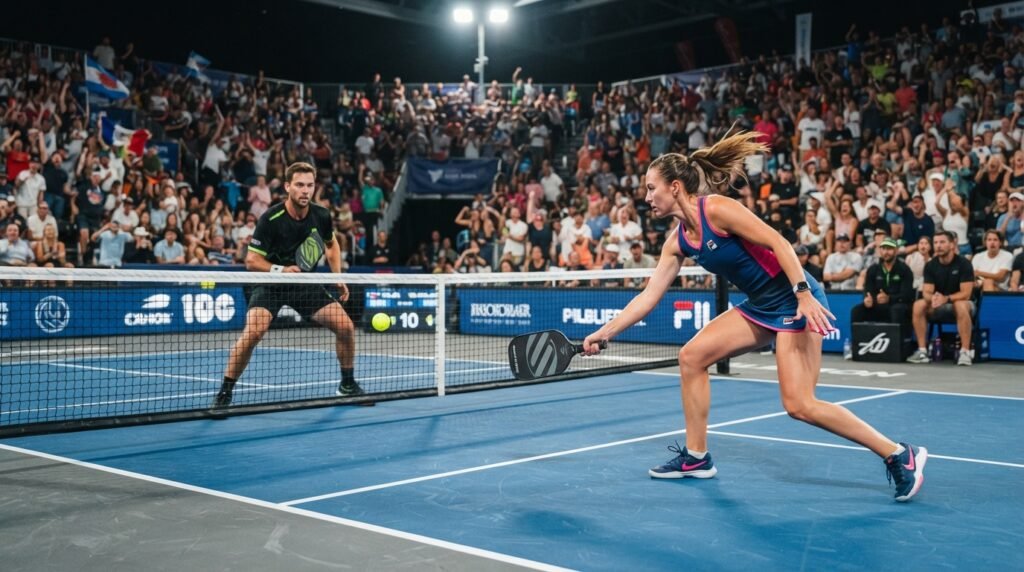
Step 8: Target Space, Weaknesses, and Uncomfortable Contact Points
Find where your opponent feels least comfortable to gain an edge. Aim at court corners to open space, or target the player’s hip or shoulder. Disrupting their contact point can produce a weak return that you can put away.
Step 9: Use Winning Pickleball Techniques at the Non-Volley Zone
Many matches are decided at the kitchen line. Use winning pickleball techniques, such as the unattackable dink, to keep opponents pinned back. Keep your paddle up and your center of gravity low to react quickly to speed-ups.
Step 10: Coordinate With Your Doubles Partner
Communication matters when using competitive pickleball strategies with a teammate. Move together, shifting left or right as one unit to cover the court. Clear signals about who takes the middle ball prevent confusion and strengthen your defense.
Step 11: Adjust Your Tactics to Opponent Tendencies
Each opponent has a different style, so stay flexible. Against an aggressive hitter, use neutral shots to slow the ball. Against a defensive player, reset the point and wait for a high ball to attack.
| Opponent Style | Primary Tactic | Goal |
|---|---|---|
| Aggressive Hitter | Soft Resets | Neutralize pace |
| Defensive Player | Deep Placement | Force errors |
| Inconsistent Player | High Volume | Maintain pressure |
Turn Your Skills Into a Competitive Pickleball Game Plan
An effective pickleball game plan helps you stay calm in high-stakes matches. Focus on a wider plan instead of single shots to gain an edge over players who depend on raw talent. This shift separates casual players from true competitors.
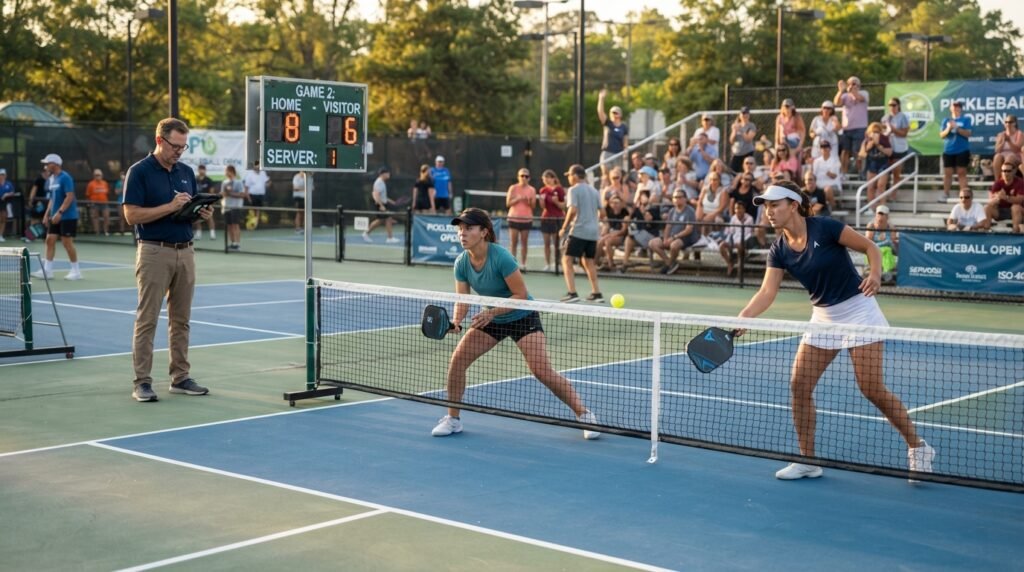
Step 12: Create a Point-by-Point Match Strategy
Before entering the court, set a main goal for each rally. Try to put opponents in uncomfortable positions, not simply keep the ball in play. Using advanced pickleball tactics means picturing your serve and return before each point begins.
Step 13: Manage Score, Momentum, and Risk
Knowing the score helps you choose the right level of aggression. Ahead, choose high-percentage shots to protect your lead. Behind, use controlled, high-reward shots to disrupt the game’s rhythm.
Step 14: Practice the Best Pickleball Strategies With Purpose
Drills should copy real-game situations so your training transfers to the court. Practice sequences like the third-shot drop or transition resets to build muscle memory. Using the best pickleball strategies in practice helps you stay calm when tournament pressure mounts.
Step 15: Review Matches and Improve Your Pickleball Strategy
Growth comes from reviewing your choices, not only the final score. Keep a match log to find play patterns and areas where your competitive pickleball strategies faltered. This objective review turns every loss into a useful lesson for future improvement.
| Strategy Focus | Low-Risk Approach | High-Risk Approach |
|---|---|---|
| Score Advantage | Maintain consistency | Aggressive placement |
| Momentum Shift | Reset the rally | Force errors |
| Skill Development | Drill fundamentals | Test new tactics |
Conclusion
Winning matches takes more than raw athletic power. Success comes from repeatable decisions, purposeful positioning, and patient shot selection during every rally.
You can master your pickleball strategy by focusing on these core elements. Smart choices often beat pure speed against tough opponents. A clear, effective pickleball game plan helps you stay calm during high-pressure moments.
Consistency grows when you follow a structured approach. Whether you hit deep serves or manage the transition zone, your mindset shapes the outcome. You will notice immediate improvements as you sharpen your tactical awareness.
Review your recent matches to find areas for growth. This habit helps you improve pickleball strategy across every phase of doubles or singles play. High-level players gain confidence by following their established plans.
Pick up your paddle and apply these concepts during your next practice session. Share your progress with your doubles partner to build better chemistry on the court. Your dedication to strategic play will transform your results over time.