Why do some players glide across the court with precision while others struggle to keep rallies alive? The secret often comes from moving beyond casual games and practicing with purpose. Pickleball blends tennis, badminton, and table tennis, requiring unique physical and mental habits.
Mastering these pickleball drills is a fast path from recreational enthusiast to strong competitor. Repeating correct techniques helps your body perform complex movements without hesitation during high-pressure rallies. This guide covers training basics, from fundamental footwork to advanced tactical positioning.
We will show you the best pickleball drills for sharper reaction time and better court awareness. Whether you refine your serve or perfect your net game, these exercises help you see measurable progress every time you step onto the court.
Key Takeaways
- Transition from casual play to competitive confidence through structured training.
- Develop essential muscle memory by repeating core techniques consistently.
- Improve your reaction time during intense rallies with targeted movement exercises.
- Master the unique blend of skills required for this multi-faceted sport.
- Create a sustainable weekly practice plan to track your long-term growth.
Set Up Your Pickleball Practice for Faster Improvement
You can improve your court performance by giving each training session a clear purpose. A planned approach helps every minute support your long-term growth.
Choose Your Training Goal and Skill Level
Your progress depends on choosing the right pickleball training drills for your skill level. Beginners should build consistency and movement first.
Players seeking pickleball drills for beginners should practice hand control and basic court positioning. Advanced players should practice pressure, complex decisions, and competitive limits to sharpen their tactics.
Prepare the Court, Equipment, and Practice Partner
Success starts before the first shot. Use a regulation court and a paddle that fits your grip comfortably.
Gather plenty of high-quality pickleballs to reduce downtime. Without a dedicated practice partner, use a reliable ball machine for a steady training rhythm.
Use a Consistent Drill Format
Efficiency helps you master new skills. Use a repeatable routine with a light warm-up, focused repetitions, and realistic scoring.
End each session with a short performance review. This habit shows which areas need more work. It also keeps your five to seven chosen drills productive, not rushed.
Build Reliable Fundamentals With Pickleball Drills
Strong fundamentals can lift your play from beginner to pro. Use effective pickleball drills to isolate your grip, stance, and paddle position before adding a live ball. Shadow practice refines your swing path without rally pressure.
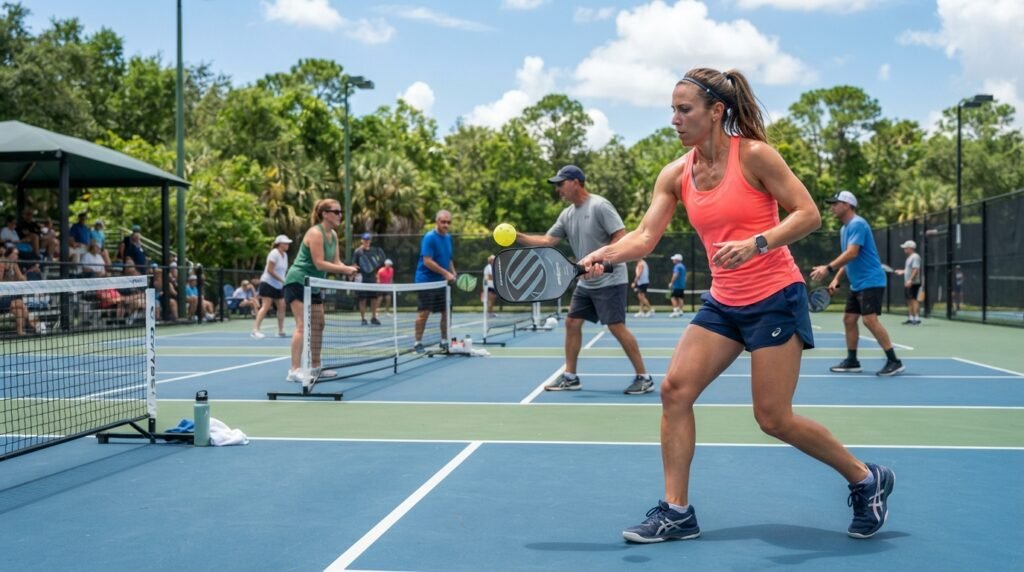
Step 1: Improve Hand-Eye Coordination With Controlled Dinking
Dinking is central to a high-level game. Keep your paddle in front of your body to maintain control. Use these pickleball drills to practice soft hands near the kitchen line and keep contact consistent.
Step 2: Develop a Repeatable Serve and Return
Consistency starts with your opening shots. Aim for a deep, reliable serve that forces your opponent to move back. Practice your return by focusing on depth and placement instead of raw power.
Step 3: Train Your Third-Shot Drop
The third-shot drop helps you move from the baseline to the net. Use effective pickleball drills to master the ball’s arc and land it softly in the kitchen. Keep your swing compact and follow through toward your target for accuracy.
Step 4: Strengthen Your Volley Technique
Volleys require quick reflexes and a stable platform. Keep your paddle up and avoid large, sweeping motions that cause errors. By practicing these pickleball drills, you will build muscle memory to block hard shots and reset the point effectively.
Advance Your Game With Footwork and Pressure Drills
Mastering the court takes more than hitting the ball. It requires precise footwork and pressure control. These top pickleball drills build agility, help you reach balls early, and keep your balance.
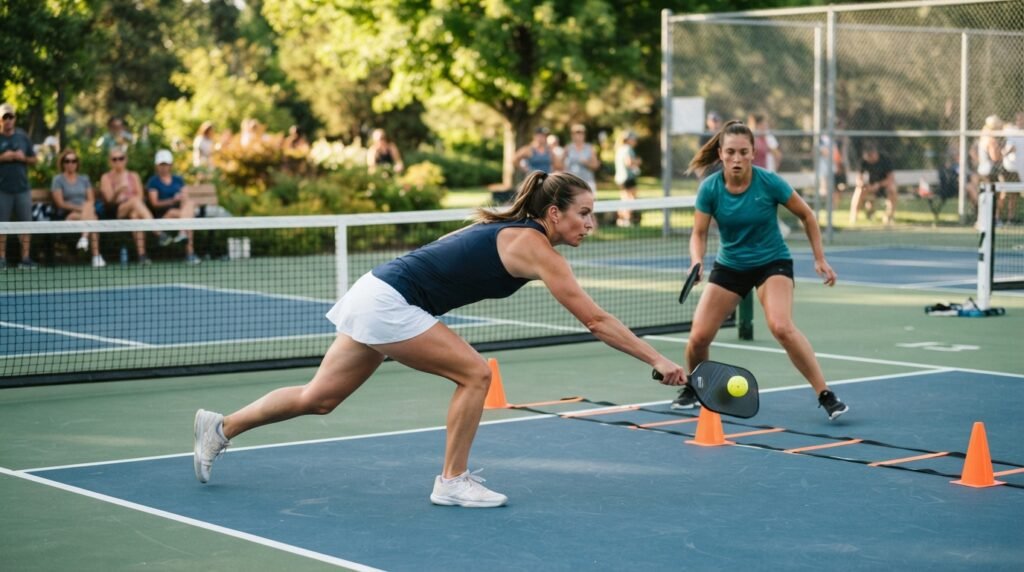
Step 5: Improve Court Movement With Pickleball Footwork Drills
Effective movement starts with the split step, which keeps you ready to react in any direction. Practice lateral shuffles and controlled pivots to stay in the best position for each shot.
- Split Step: Time your hop to land exactly when your opponent makes contact.
- Lateral Shuffles: Keep your feet wide and low to cover the court efficiently.
- Recovery Positioning: Always return to the center of your court after every shot.
Step 6: Handle Transition-Zone Pressure
The transition zone is often where players lose points. Use the “Three and Go” framework to master this area. Complete at least three successful resets before moving toward the kitchen line.
This disciplined approach keeps you from rushing into a poor position. Focus on control instead of power, and make opponents work harder for points.
Step 7: Build Reaction Speed With Rapid-Fire Volleys
Reaction speed is a key part of advanced pickleball drills. Have a partner feed balls at high speed to mimic a fast rally. This practice builds instinct and short, compact swings.
| Drill Type | Focus Area | Goal |
|---|---|---|
| Rapid Volley | Hand Speed | Reduce Error |
| Lob Defense | Footwork | Court Coverage |
| Reset Drill | Touch | Point Control |
Step 8: Practice Overheads and High-Ball Attacks
When your opponent hits a weak ball, be ready to capitalize. Practice overhead smashes with side-on positioning and full extension. Do not only swing hard; aim at specific targets to keep your opponent off balance.
Add unexpected lobs to practice sessions to test your defensive recovery. Training for these high-pressure situations helps your game stay strong during competitive play.
Turn the Best Pickleball Drills Into a Weekly Training Plan
A clear weekly schedule turns random practice into purposeful skill development. Organize your time so each court minute supports long-term growth. Consistent pickleball practice drills build muscle memory and keep sessions focused and efficient.
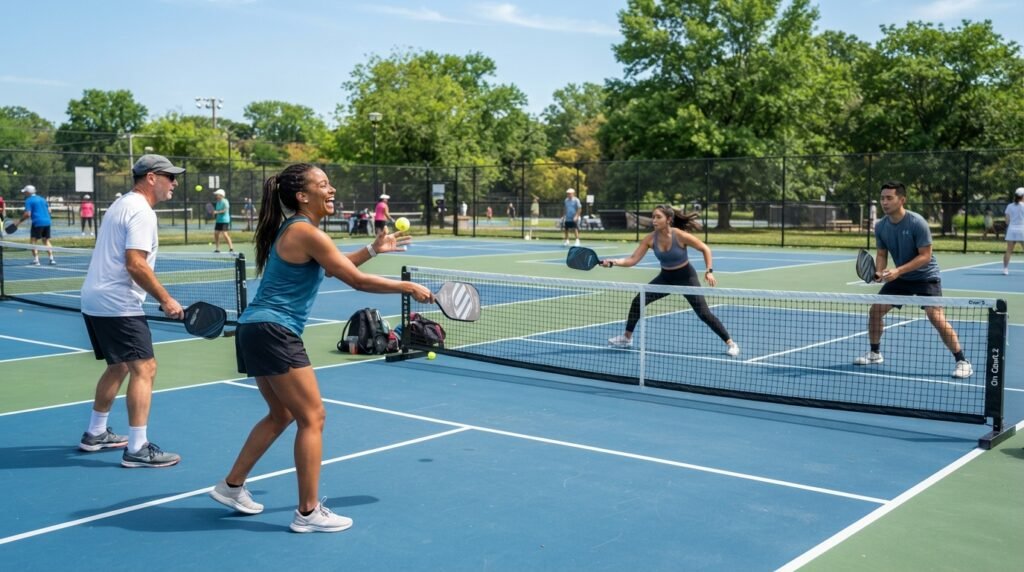
Step 9: Follow a Beginner Practice Session
Beginners should build consistency and cover the court. Focus on controlled movement and basic shot selection to create a solid foundation.
- Spend 10 minutes on straight-ahead dinking to find your rhythm.
- Dedicate 10 minutes to serving and returning deep into the court.
- Practice basic pickleball footwork drills to stay balanced before every contact.
Step 10: Follow an Intermediate Practice Session
After mastering the basics, focus on transition-zone pressure and shot variety. Use drills that recreate game-like situations.
Practice rapid-fire volleys to improve reaction speed at the kitchen line. Practice third-shot drops against a partner who actively attacks your shots.
Step 11: Follow an Advanced Practice Session
Advanced training requires intense pressure and smart decisions. Focus on punishing high balls and staying calm during fast rallies.
| Drill Type | Focus Area | Duration |
|---|---|---|
| Skinny Singles | Court Coverage | 15 Minutes |
| Overhead Smashes | Put-away Power | 10 Minutes |
| Transition Resets | Defensive Control | 10 Minutes |
Measure Progress and Correct Common Mistakes
Tracking performance is essential for steady improvement. Spend five to ten minutes after each session recording successful repetitions and recurring errors.
If shots land in the net, adjust your footwork to improve your position. Documenting progress helps you refine weekly shot priorities and reach goals faster.
Conclusion
Consistent, structured practice creates a clear path to better court performance. Random ball hitting rarely builds the muscle memory needed for high-level play. Dedicated sessions for dinking, serving, and third-shot drops give you more value.
Your journey starts with basic grips and balance. As confidence grows, you advance to complex footwork and transition-zone pressure. Match play tests these skills and shows whether training produces points in competitive games.
Follow a repeatable weekly plan, measure progress honestly, and track win rates against specific opponents. Increase drill difficulty only after reliable execution. Stay focused on your objectives, and watch your game reach new heights.